Systematic learning and point learning 🌱
TL;DR
Effective learning requires a conscious choice between a systematic and a point-based approach, depending on the goal and context. This allows for more efficient knowledge acquisition and the responsible application of that knowledge in practice.
Introduction
One of the most important insights that helped me learn more effectively was realizing that learning can be approached in two ways: systematically or point-by-point—and that choosing the right method for the specific goal is crucial for both efficiency and the responsible use of that knowledge.
A small digression: I am sure someone else has described this distinction better elsewhere, but I couldn’t find the exact terminology. For the purpose of this post, I will use my own working definitions.
Systematic Learning
I define systematic learning as the process of learning a subject from the ground up, gradually deepening my understanding of various topics to eventually gain broad, solid competencies in a given field, and ultimately mastering a specific aspect of it.
My study of psychology is primarily a process of systematic learning—a long-term, structured, and planned process starting from the basics, focused on acquiring and reinforcing foundational knowledge.
Such thorough and extensive knowledge is crucial when I plan to use it while working with people. Gaps in knowledge could have serious consequences—both for me and for the people I will be working with.
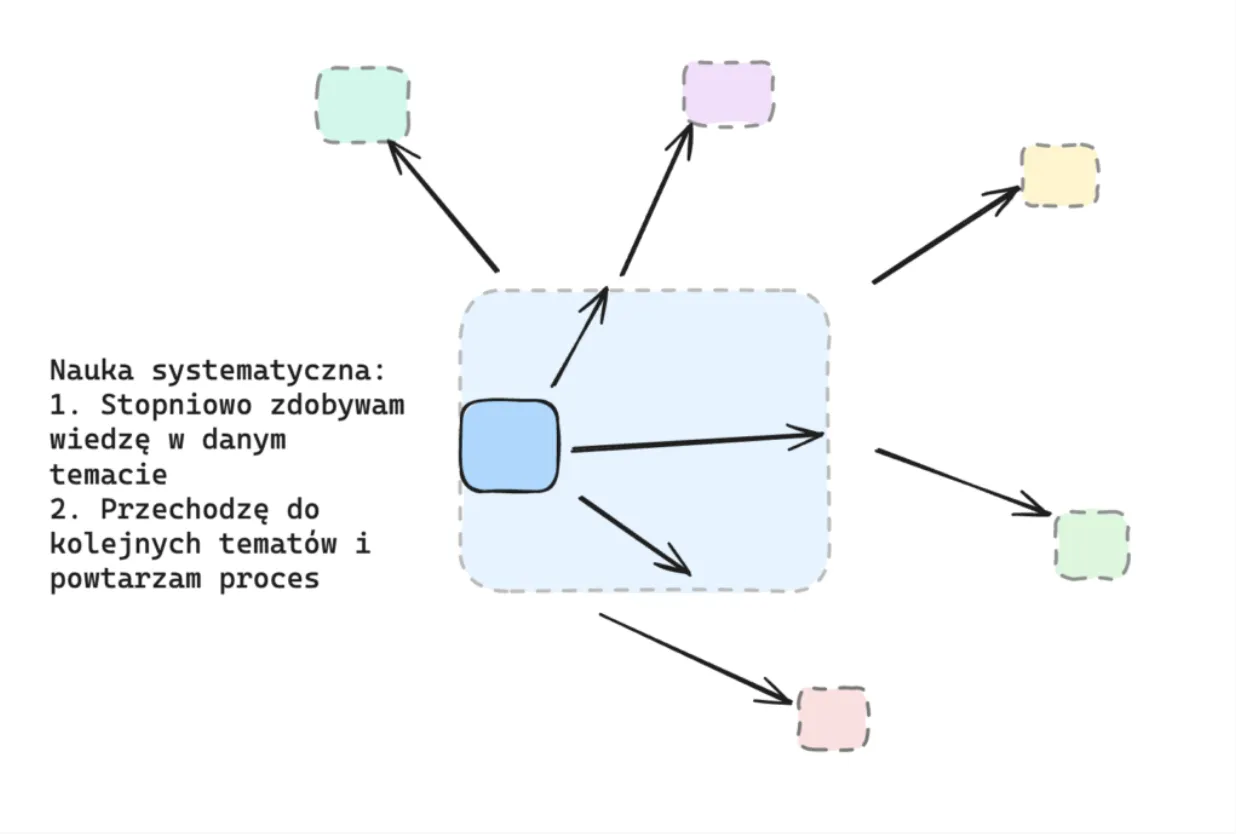
Example
I begin my psychology studies with an “Introduction to Psychology” course and by reading a foundational textbook (for example, “Psychology and Life” by P. Zimbardo or “Academic Psychology” edited by D. Doliński and J. Strelau).
Gaining this knowledge helps me realize the existence of further sub-fields within a domain as vast as psychology and gives me some rudimentary knowledge about them.
After mastering the basics, I can move on to more specific topics (e.g., biological bases of psychology, cognitive psychology, developmental psychology)—and the whole process repeats. Ultimately, this allows me to gain both broad knowledge of psychology as a whole and the opportunity to find a niche in which I want to specialize.
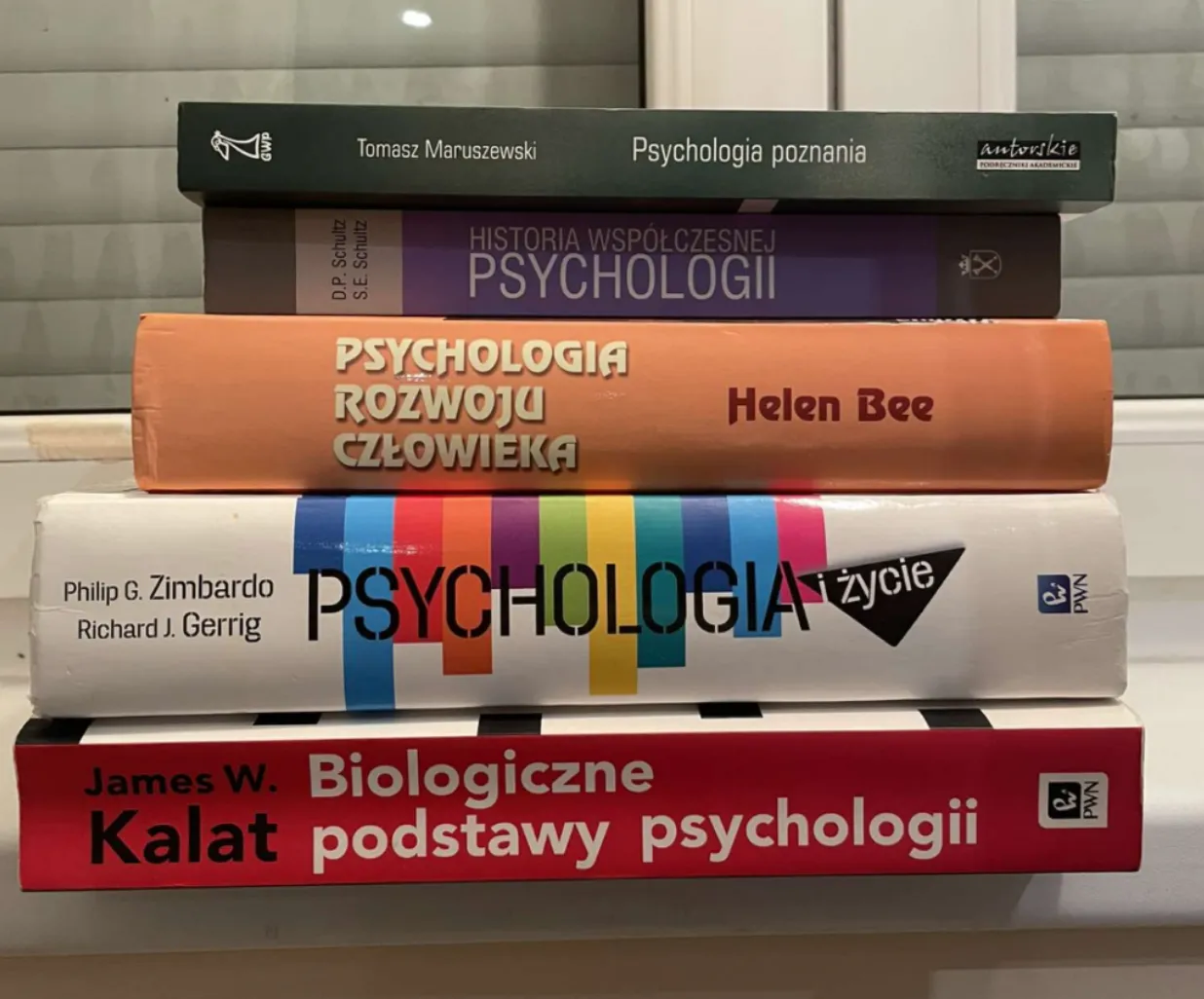
The same applies to other fields of science—medicine, computer science, finance, religious studies, philosophy, etc. Mentors, teachers, trainers, and lecturers are often involved in this process.
I apply the same process when learning skills that are the foundation of a Product Manager’s work and are not tied to specific domain knowledge—customer discovery, strategy, storytelling.
I assume that if I want to use certain knowledge to significantly impact reality, and do so responsibly without harming others, I should acquire that knowledge systematically.
Point Learning
For me, point learning is the conscious intention to better understand very specific and significantly narrowed areas that I need for a particular purpose. It is a process heavily oriented toward solving a specific problem, where I try to gain the necessary knowledge in a short amount of time.
I would call my recent process of building the FlyCards app “point learning.” In short, I was frustrated by the inefficient process of creating high-quality flashcards for new Hungarian words (the kind that include images, translations, and example sentences), so I decided to write an iOS app to solve my specific problem. I am one of those people stuck in tutorial hell—fortunately, with ChatGPT or Claude at my disposal, I can quickly gain the knowledge I lack to solve my problem. In this case, my learning looked something like this:
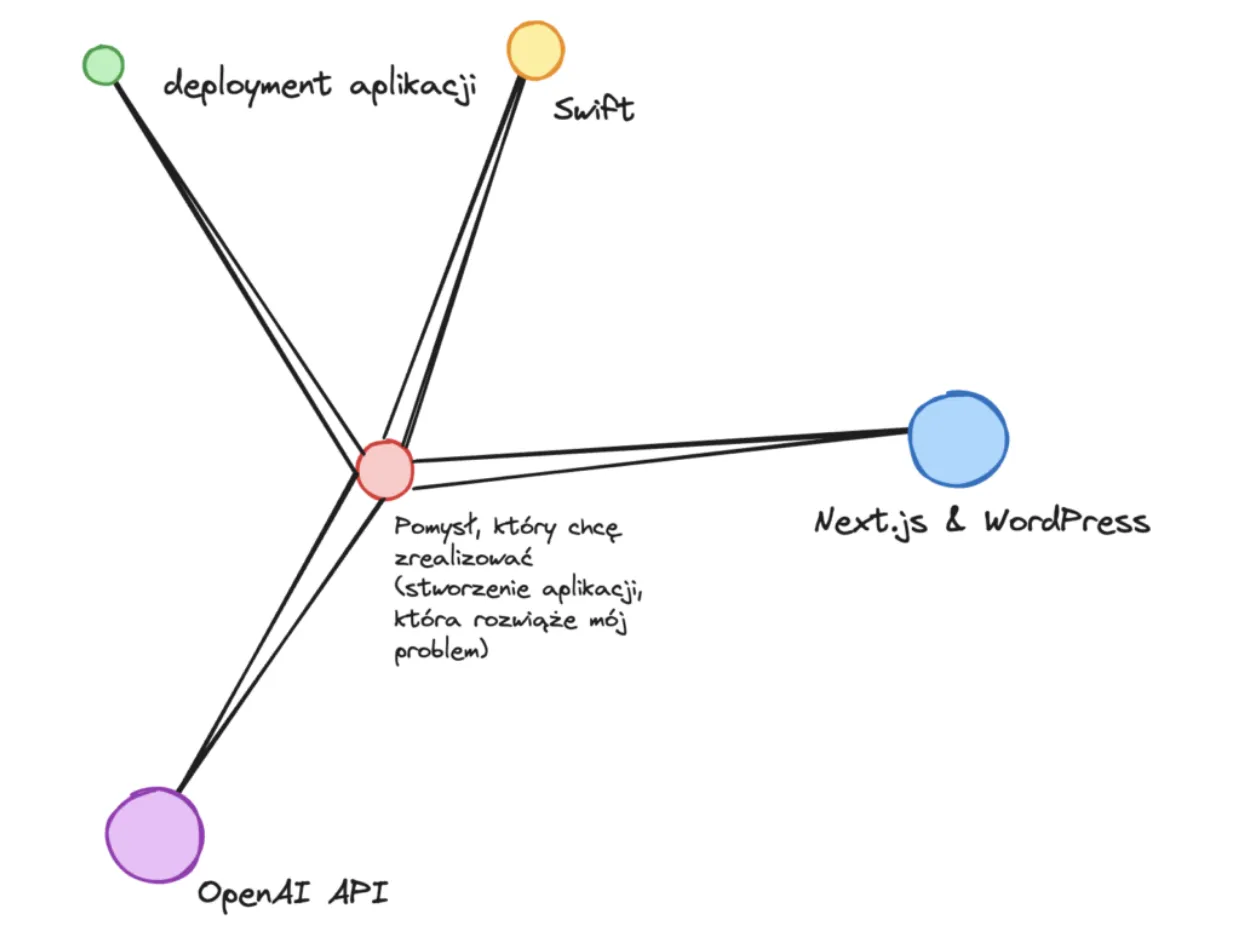
When starting the implementation process, I didn’t yet know what I would need to learn. Claude helped me develop an execution plan and helped me understand which knowledge gaps I needed to fill. The final “map” of new skills looked roughly like the image above.
In the point learning process, I start with an idea or a specific need—and as I break that idea down into its component parts, I realize what knowledge and skills I need to solve the problem. Unlike systematic learning, I don’t care about the breadth of the knowledge gained or a full understanding of the topic. On the contrary, I ruthlessly focus only on what I need and cut out everything that has no practical significance for me.
The process of acquiring the domain knowledge necessary for my work is mostly point learning—at some point, I become aware of a concept I don’t yet know or understand well, and I must acquire this (relatively narrow) knowledge in the shortest possible time so that I can quickly put it into practice. Time and the right balance between speed and accuracy are particularly important here.
Although I often use AI to assist me in this process now, in my professional work, I rely heavily on subject matter experts—people with deep domain knowledge who help me identify concepts I should learn more about to solve a problem and, ultimately, help me understand them better.
Conclusions
One of the mistakes I (still) make is applying the wrong method to the wrong situation.
If I apply a point-based approach to situations where I should be learning systematically, I will never achieve mastery and will not be able to use my knowledge in a socially responsible way.
If I apply a systematic approach to situations where I should be learning point-by-point, I won’t solve a critical problem in a short amount of time. In many cases, when I have to choose between time and accuracy, time turns out to be the more important factor.
When learning point-by-point, I may fall into the trap of thinking I have understood the problem in its entirety—and I must remember that I haven’t. I am still a Visitor, not a Native.
I don’t think either approach is inherently better or worse—they are simply tools I can use for appropriate purposes.
For further exploration
- Detailed learning techniques within the systematic and point learning processes.
- Is there a better name for this already created by someone wiser?
- Knowledge vs. Confidence